Panama: Where the World Narrows and Opens
Glass towers on the Pacific, colonial streets in Casco Viejo, the gravity-fed mechanics of the Canal, and a sloth that refuses to be hurried.
Field Notes · 11 min read
Panama is one of those places where geography does not just explain the country; it practically wrote the business plan. It is a narrow bridge between continents, a hinge between oceans, and a city where a morning can start high above the Pacific at the JW Marriott, move through colonial streets in Casco Viejo, and end beside one of the most important pieces of engineering on Earth.
One minute you are looking at lock gates and container traffic. The next, a sloth is pretending time is optional, bats are camouflaged against a tree, and a capuchin is sizing you up like he is about to renegotiate NAFTA.
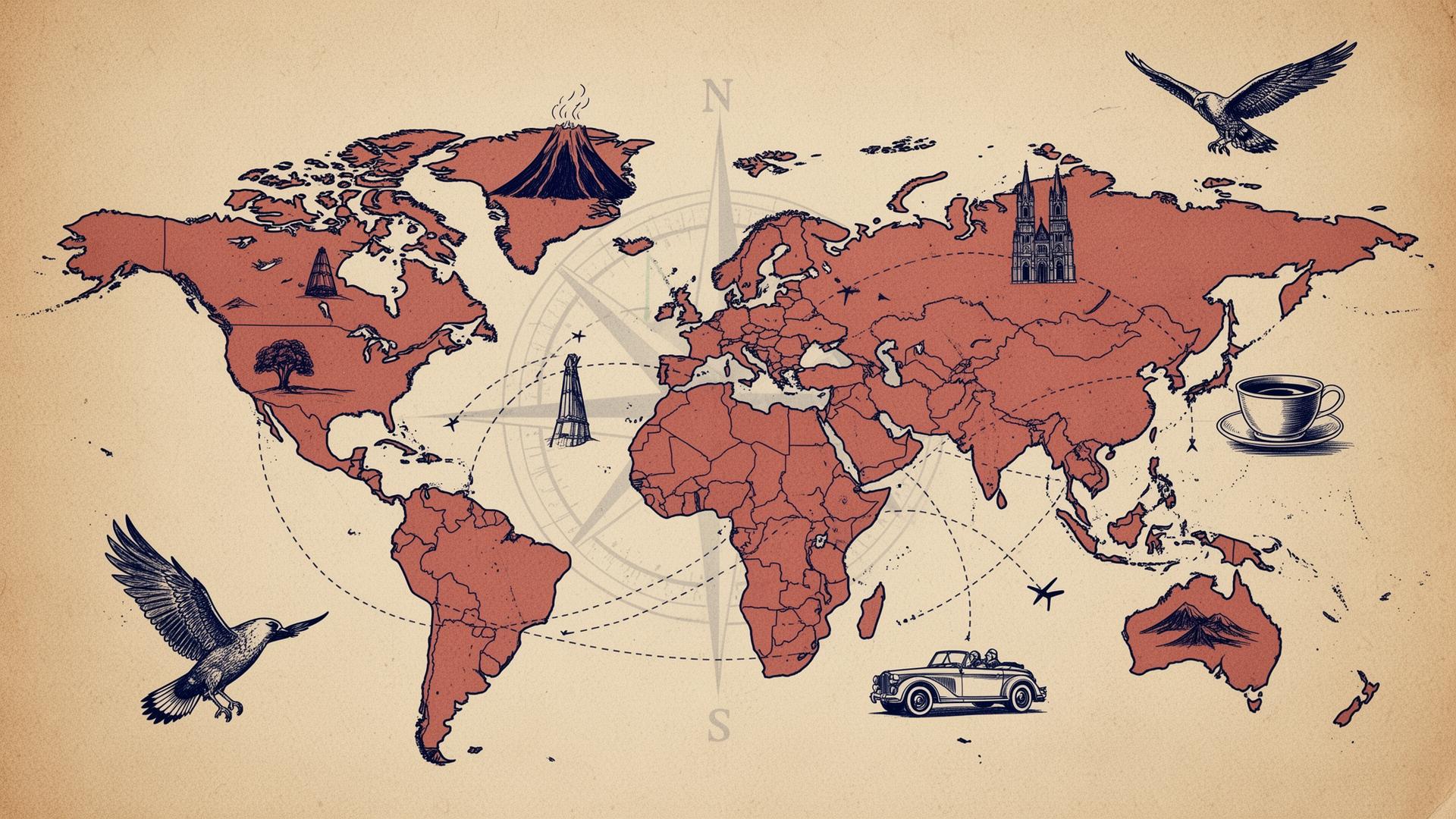
Staying at the JW Marriott made the city feel vertical and coastal at the same time, towers, balconies, pools, and open water all competing for attention. Panama is not just an old canal story. It is a living logistics, banking, tourism, and trade hub that keeps reinventing itself. The view also makes the geography obvious: the isthmus connects North and South America, with the Caribbean to the north and the Pacific to the south.
Casco Viejo is the historic district that rose after the original Panama City was destroyed in the 17th century. Restored balconies, old churches, crumbling ruins, rooftop pools, red-tiled roofs, plazas, sea walls, and the modern skyline always waiting in the background. The architecture feels European, Caribbean, and Latin American all at once, exactly the point. Panama has always been a crossroads.
The Canal is not simply a cut through land. It is a controlled water staircase across the isthmus. Ships are lifted from the ocean up to the level of Gatun Lake, then lowered back down on the other side. A ship enters a chamber, gates close behind it, and water flows in or out through massive culverts. Gravity does most of the work. Fluid mechanics at industrial scale.
The French began the project in the late 1800s; disease, tropical conditions, and financial collapse overwhelmed them. The United States completed a lock-based design, and the Canal opened in 1914. Under the Torrijos-Carter Treaties, control transferred to Panama at the end of 1999. Today the Canal is a national symbol, an economic engine, and one of the clearest examples of geography becoming destiny.
After the locks, the boat ride onto Gatun Lake adds a completely different dimension. The sloth was the perfect symbol for the rainforest portion of the trip: calm, unbothered, committed to energy efficiency. The bats were even better camouflaged, folded against the bark like dry leaves. The white-faced capuchin was the opposite, alert, opportunistic, and clearly running a small but ambitious island-based startup. Caimans and crocodiles along the shore: admire from the boat and do not test the food chain.
History, geology, hydrology, biology, trade, and urban reinvention, all stacked on top of each other.