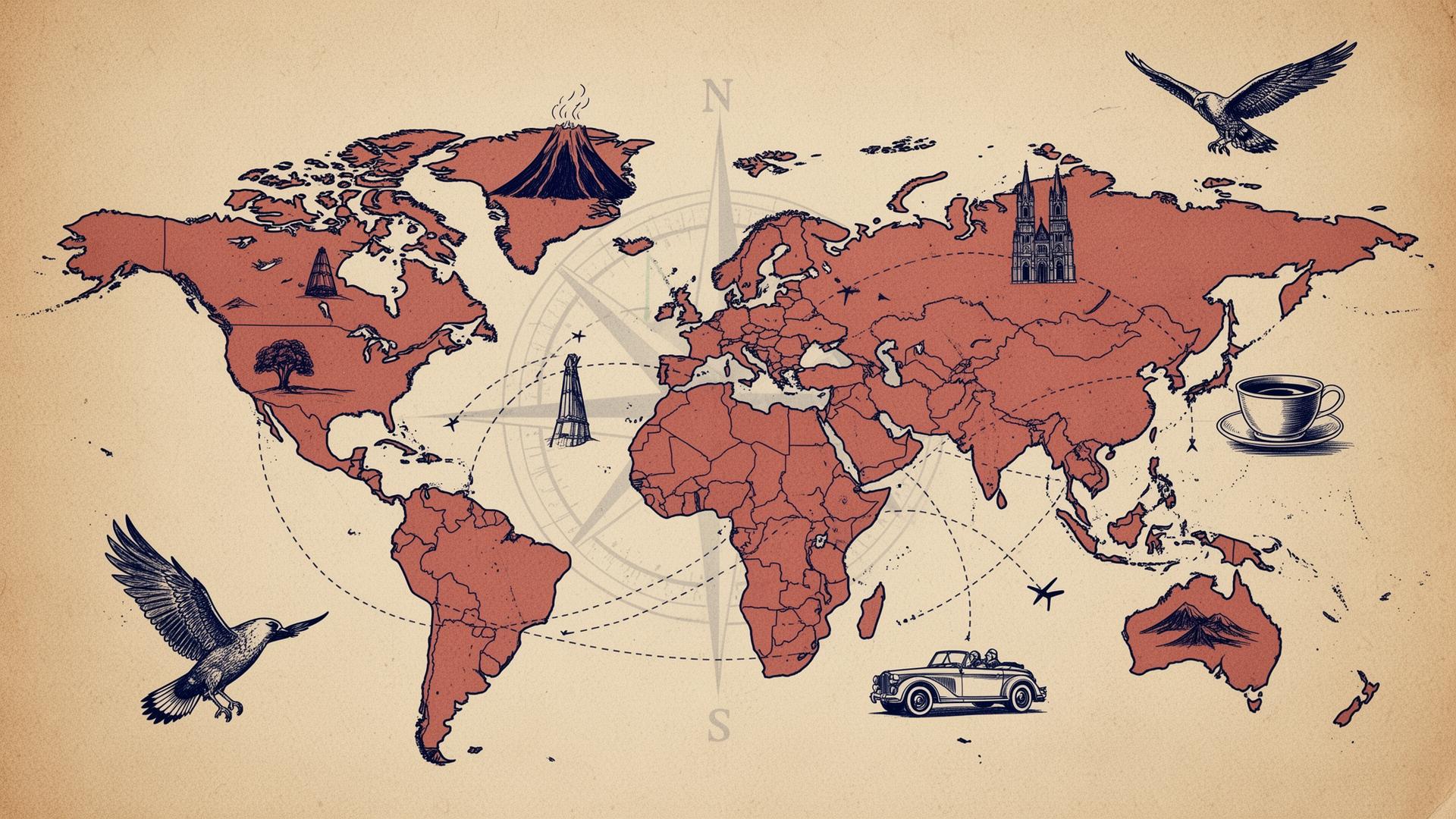
I have never been a "step off the plane, take a selfie, count the country" kind of traveler.
For me, visiting a country is not about touching international soil. It is not about a layover. It is definitely not about eating airport food, having a drink in a terminal, and declaring victory because my passport briefly entered a new time zone.
That does not count.
To me, a country is truly visited when I have made an honest attempt to experience it.
That means leaving the airport. Walking the streets. Eating the food. Talking to locals. Learning at least a little history. Seeing how people live. Asking questions. Trying something unfamiliar. Occasionally sweating through my shirt, mispronouncing everything, and realizing once again that Google Maps is both a miracle and a liar.
Travel, for me, is about exploration.
Sometimes that exploration is a week. Sometimes it is three days. Sometimes it is only 24 hours on a layover between flights. But if I can get out into the city, meet people, taste the food, see the architecture, understand a bit of the culture, and come away with a story, then it counts.
My Definition of a Visited Country
Here is my personal rule:
A country counts when I have meaningfully experienced it beyond the airport.
That usually includes some combination of:
- Spending time in a city, village, historic site, natural landmark, market, neighborhood, or cultural area.
- Eating or drinking something local outside the airport.
- Talking with locals, guides, drivers, hotel staff, restaurant owners, or people who help me better understand the place.
- Learning something about the history, culture, geography, politics, architecture, religion, wildlife, food, or daily life.
- Making an effort to see the country through something more than a tourist checklist.
So no, a layover alone does not count. A foot on the jet bridge does not count. A beer in the airport lounge does not count.
But a well-planned long layover where I hire a local guide, explore a city, eat real food, visit important sites, and connect with people? Absolutely. That counts.
The Way I Travel
I am a planner. Some might say obsessive. Those people are probably correct.
Before I go anywhere, I usually research the country, the entry rules, the neighborhoods, the transportation options, the safety considerations, the hotels, the flight schedules, and the transfer logistics. I want to know how I am getting from the airport to the hotel, from the hotel to the volcano, from the volcano to dinner, and from dinner back to the hotel without accidentally becoming the subject of a cautionary travel blog.
I look closely at:
- Flight timing and connection windows.
- Hotel location and walkability.
- Airport transfers and trusted drivers.
- Local safety conditions.
- Tour guide quality and reviews.
- Currency, tipping, and payment methods.
- Food, souvenirs, and cultural etiquette.
- What can realistically be done in the time I have.
I love spontaneous moments, but I prefer them inside a well-built plan. The magic can happen when the foundation is solid.
Guides, Locals, and Real Connections
One of the most important parts of how I travel is hiring local guides whenever possible.
A great guide changes everything. They can explain what you are seeing, what you are missing, what matters, and what the guidebook got wrong. They know the hidden details: why a building looks the way it does, where the best local food is, which souvenir is authentic, which neighborhood has changed, and which story every visitor should hear but few actually do.
Some of my best travel memories have come from conversations with guides, drivers, restaurant owners, hotel staff, shopkeepers, and people who were kind enough to share a little of their world with me.
That is the difference between seeing a place and feeling a place.
The Tools I Use
My travel planning usually starts with flight research. I look for routes, connection options, layover windows, and ways to turn travel time into an experience. A long layover can become a mini-adventure if the timing, visa rules, airport distance, and safety all line up.
I rely heavily on digital tools for planning and organization, including:
- Google Flights for route and fare research.
- FlightConnections or similar route-mapping tools to understand what is possible.
- Google Maps for neighborhoods, drive times, restaurants, hotels, and saved places.
- Tripadvisor, Viator, GetYourGuide, ToursByLocals, and local operator websites for tour ideas and guide research.
- Hotel websites and loyalty apps for location, amenities, and reliable booking.
- Government travel advisories and local news when safety or logistics require extra attention.
- WhatsApp for communicating with guides, drivers, and local contacts.
- Travel blogs, YouTube, Reddit, and forums for the practical "what is this really like?" details.
The goal is not to remove all uncertainty. That would be impossible, and frankly, boring. The goal is to reduce the preventable problems so there is more room for the memorable ones.
Safety Matters
I love adventure, but I am not reckless.
Safety is part of the planning process. I look at where I am going, when I am arriving, how I am getting around, and whether it makes sense to explore independently or with a guide. In some places, wandering is part of the fun. In others, a trusted local guide is the difference between a great day and a bad decision with luggage.
I pay attention to local advice. I avoid unnecessary risks. I think about timing, transportation, neighborhoods, and whether I should be carrying a camera, cash, or simply more common sense than usual.
Travel should stretch you. It does not need to end with a call to the embassy.
Making an Impact
As my travel has evolved, I have also become more interested in leaving something positive behind.
That impact does not always have to be large. Sometimes it is hiring a local guide instead of booking through a giant platform. Sometimes it is eating at a family-owned restaurant, buying a handmade souvenir, tipping well, supporting a local business, or choosing a hotel with a meaningful community mission.
When feasible, I also look for ways to make a larger impact through philanthropy, especially around technology, education, clean water, solar power, and local opportunity. Travel has a way of making the world feel both bigger and smaller at the same time. When you meet people, see communities, and understand needs firsthand, giving becomes more personal.
I do not want to just collect countries. I want to collect perspective.
Why I Write These Blogs
These blogs are part memory, part guide, and part gratitude.
They are a way to document where I have been, what I learned, what surprised me, what I would recommend, and what I might do differently next time. They are also a way to show that travel does not always need to be perfect, luxurious, or long to be meaningful.
- Sometimes it is a week in Central America.
- Sometimes it is 24 hours in Doha.
- Sometimes it is a layover in Shanghai.
- Sometimes it is a volcano hike, a canal crossing, a rum tasting, a market visit, a temple, a historic city, a wildlife encounter, or a meal that makes you wonder why airport sandwiches are allowed to exist.
But the common thread is simple:
- Get out.
- Explore.
- Talk to people.
- Taste the food.
- Learn the story.
- Respect the culture.
- Plan well.
- Stay safe.
- Make a connection.
- And when possible, leave something good behind.
That is how I travel.