A Love Letter to Rum: Zacapa, Flor de Caña, Cihuatán, and Beyond
Zacapa in Antigua, Flor de Caña in Granada, Cihuatán in El Salvador, Bacardi in San Juan, Macorix in Puerto Plata, and a Roatán rum shop that refused to be forgotten. A short history of the bottles I keep coming back to.
Field Notes · 7 min read
Rum is sugarcane, sun, salt, patience, and a healthy tolerance for humidity. It is the Caribbean and Central America bottled. - Scott Barlow
Some spirits I respect. Rum I actually love. Whiskey is a library, tequila is a fistfight with citrus, gin is a botanist showing off, but rum is the tropics translated into a glass. Every time I have crossed the Caribbean or Central America, a bottle has found its way into my carry-on and, more importantly, into a story worth writing down.
Rum begins with sugarcane, which begins with sugar, which is why the crop, the drink, and the region have been tangled together for five centuries. The Spanish and Portuguese brought cane to the Americas in the 1490s. By the 1600s, Caribbean plantations were producing molasses as a byproduct of refining sugar, and enslaved workers on Barbados discovered that fermenting and distilling that molasses produced a spirit fierce enough to warrant its own economy. That spirit became rum. The history is not gentle. The drink that survived it, at its best, is.
Guatemala: Zacapa at Casa del Ron
Ron Zacapa is aged high in the Guatemalan mountains at roughly 2,300 meters, in a cellar the distillery calls the House Above the Clouds. The thin, cool air slows evaporation and softens the maturation, which is why Zacapa drinks like something older than it is. The rum uses virgin sugarcane honey rather than molasses, and it is finished in a solera system that blends bourbon, sherry, and Pedro Ximénez casks. It has been made in the town of Zacapa since 1976, and its Sistema Solera 23 was for years the flagship.
My tasting at Casa del Ron in Antigua moved from Zacapa 23 to XO and then to a special Royal. The Royal was the surprise: smooth, layered, and quietly dangerous, the kind of pour that makes you sit up straighter and pay attention. If you go to Guatemala, do the volcano hike, walk the cobblestones, and then finish at Casa del Ron. Zacapa tastes like the country it comes from, which is exactly what a good rum is supposed to do.
Nicaragua: Flor de Caña
Flor de Caña has been distilled at the base of the San Cristóbal volcano since 1890, which makes it one of the oldest continuously operating rum distilleries in Central America. The family-owned Compañía Licorera de Nicaragua ages its rum slowly in the tropical heat, which speeds up maturation in some ways and complicates it in others, and it does not add sugar or artificial flavoring to the aged expressions. Everything you taste is barrel, cane, and time.
Walking into the tasting room in Nicaragua, with its wall of barrels stacked to the ceiling under warm lights, was one of those small travel moments that made me realize how seriously the country takes its national spirit. The 12 and 18 year expressions, neat, are two of the most underrated pours in Central America. Nicaragua does not casually make rum. It makes rum with confidence, and then quietly wins international awards while everyone else is still arguing about Barbados.
El Salvador: Cihuatán
Cihuatán is named after a pre-Columbian Mayan archaeological site in central El Salvador, and the distillery sits near the ruins in the department of San Salvador. It is a relatively young label by rum standards, launched in the 2000s under the Licorera Cihuatán operation, but the sugarcane heritage in the region runs deep. The Indigo expression is a solera-blended eight year rum, aged in ex-bourbon barrels in the Salvadoran heat, and it drinks with a lovely round sweetness that never tips into syrupy.
El Salvador surprised me on almost every front, and Cihuatán was part of that. It sits on the shelf between the better known Guatemalan and Nicaraguan bottles and quietly holds its own, which is very on brand for the country as a whole.
Puerto Rico: Bacardi Oakheart
Bacardi was founded in Santiago de Cuba in 1862 by Facundo Bacardí Massó, a Catalan wine merchant who figured out how to filter rum through charcoal and age it in oak to produce a lighter, smoother style than the harsh molasses spirits of the era. That innovation, more or less, invented modern light rum. After the Cuban Revolution nationalized the family's Cuban assets in 1960, Bacardi moved its operations abroad, and the distillery in Cataño, Puerto Rico, right across the bay from Old San Juan, became the beating heart of the brand. It is still the largest rum distillery in the world by volume.
Oakheart sits on the spiced, smoky end of the Bacardi lineup. It is aged in charred American oak and blended with natural spice flavors, and while purists will tell you a spiced rum is a compromise, sipped in San Juan with the ocean a few blocks away it lands exactly right. Context is a real ingredient.
Dominican Republic: Macorix
Macorix traces its roots to 1899 in San Pedro de Macorís, a Dominican city that grew rich and complicated on sugarcane, immigrant labor, and baseball. The Dominican Republic is one of the world's great rum producers, alongside Cuba, Jamaica, and Puerto Rico, and Macorix is one of its old and quietly proud names. The tasting in Puerto Plata walked through white, aged, and spiced expressions, each carrying a slightly different piece of the same story: cane, heat, barrel, patience, and a lot of Caribbean sunlight.
Honduras: The Roatán Rum Stop
Honduras is not the first country most people name in a rum conversation, but the north coast and the Bay Islands sit squarely in the Caribbean rum belt, and the island of Roatán has been quietly producing and importing rum for generations. My stop was less about a specific distillery and more about the moment: a small hand-painted shop, a friendly pour, and the exact right amount of island humor. It was the kind of tasting that does not need to be planned to be memorable, which is the Caribbean's whole personality in a sentence.
St. Kitts and Nevis: Brinley Gold
Brinley Gold is a small, family-run distillery on Basseterre in Saint Kitts, founded in the early 2000s and built around flavored rums. Their coffee rum has no business being as good as it is. Saint Kitts and Nevis is one of the original sugar islands of the British Caribbean, cane arrived there in the 1600s, and the ruins of old plantations and sugar mills still dot the landscape. Brinley is a modern chapter in a very old story, and it is worth a stop if you find yourself on the island.
A Very Short History of Rum
The word rum probably comes from rumbullion, a 17th century English slang term for the drink made in Barbados. By the 1700s, rum was fueling the Royal Navy, financing the sugar and slave trades, and quietly powering the American colonies, which distilled molasses shipped from the Caribbean into their own rougher New England style. When Britain taxed that molasses in the 1730s and 1760s, the resulting smuggling and resentment fed directly into the American Revolution. Rum has always been political.
Different regions produce very different rums. The former British colonies, Jamaica, Barbados, Guyana, tend toward heavier, funkier, pot-stilled styles. The Spanish-influenced countries, Cuba, Puerto Rico, the Dominican Republic, Nicaragua, Guatemala, El Salvador, developed a lighter, column-distilled, longer-aged tradition often called ron. The French Caribbean, Martinique and Guadeloupe, distill fresh sugarcane juice rather than molasses to make rhum agricole, which is grassy, floral, and completely its own thing. Six centuries in, rum is not one drink. It is a whole genre.
The Shelf, As It Stands
- Guatemala: Ron Zacapa 23, XO, and Royal, tasted at Casa del Ron in Antigua
- Nicaragua: Flor de Caña 12 and 18, tasted at the distillery under the San Cristóbal volcano
- El Salvador: Cihuatán Indigo, a solera-blended eight year
- Puerto Rico: Bacardi Oakheart, spiced and aged in charred American oak
- Dominican Republic: Macorix, from the sugar city of San Pedro de Macorís
- Honduras: A Roatán rum shop pour, name lost to the humidity, worth it anyway
- Saint Kitts and Nevis: Brinley Gold coffee rum
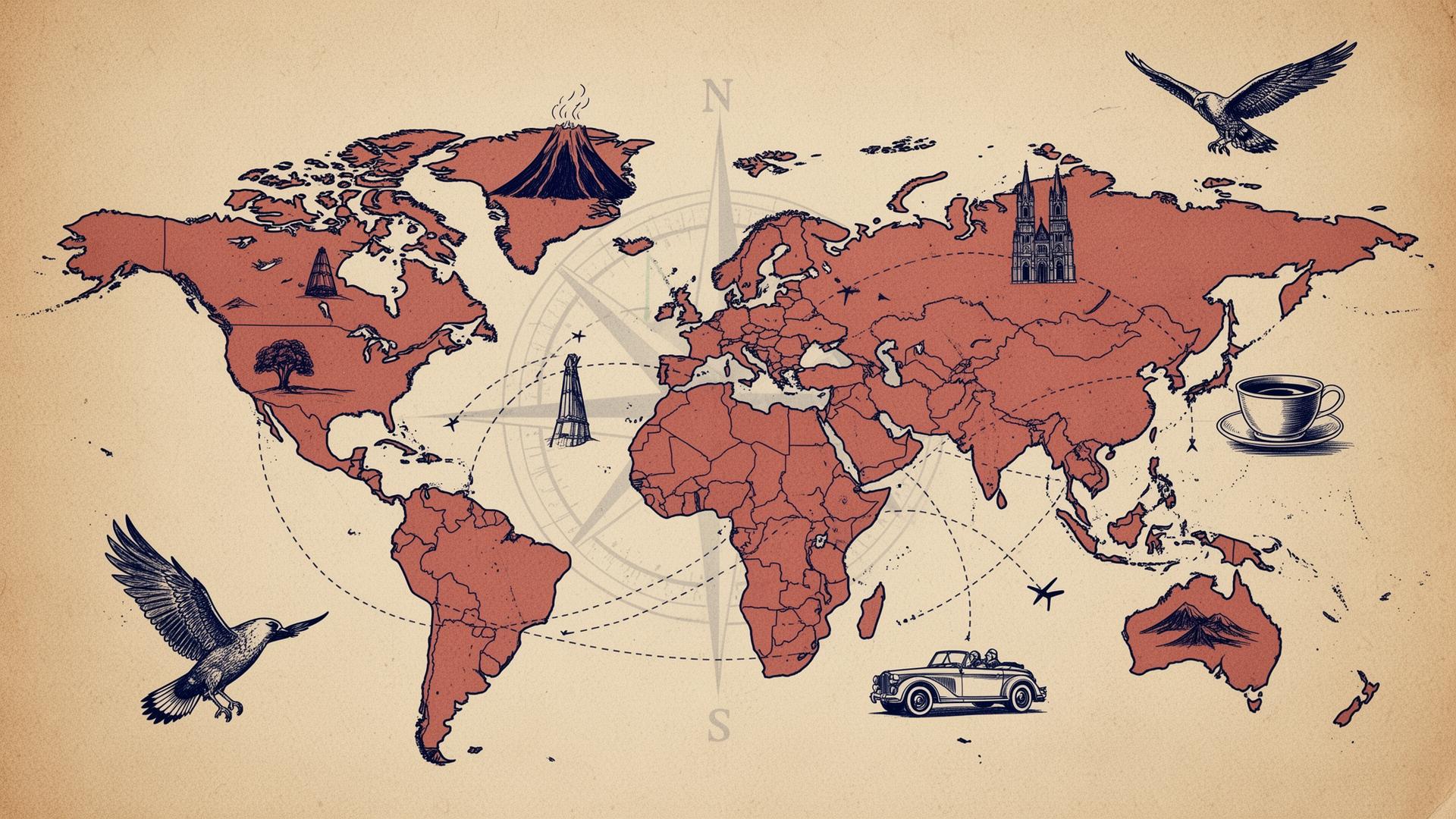
Every one of these bottles came home with a memory attached. Zacapa is the end of a Guatemala trip that started on a volcano. Flor de Caña is a cathedral of barrels and a country I keep wanting to return to. Cihuatán is El Salvador quietly outperforming expectations, again. Bacardi is Old San Juan at dusk. Macorix is Puerto Plata from the top of a mountain. Roatán is a sloth, a beach, and a laugh. Brinley is a British-Caribbean afternoon. That is the whole point. Rum is not just a drink for me. It is a map of the places that were kind to me, and I plan to keep filling in the corners, one small pour at a time.